For the first time in a long while, there was an alarm set this morning. Because we’d agreed with our Dutch friends to start driving at 8 o’clock. So at 07:45 that horrible sound went off, the one I hadn’t exactly missed. Yes, yes, I know this sounds luxurious and spoilt. And maybe it is, a little bit.
After letting some air out of the tyres, off we went. We’d already braved a few tracks with the Cayenne, but this 160-kilometre Dakar route without any tarmac would finally tell us what it was really made of.
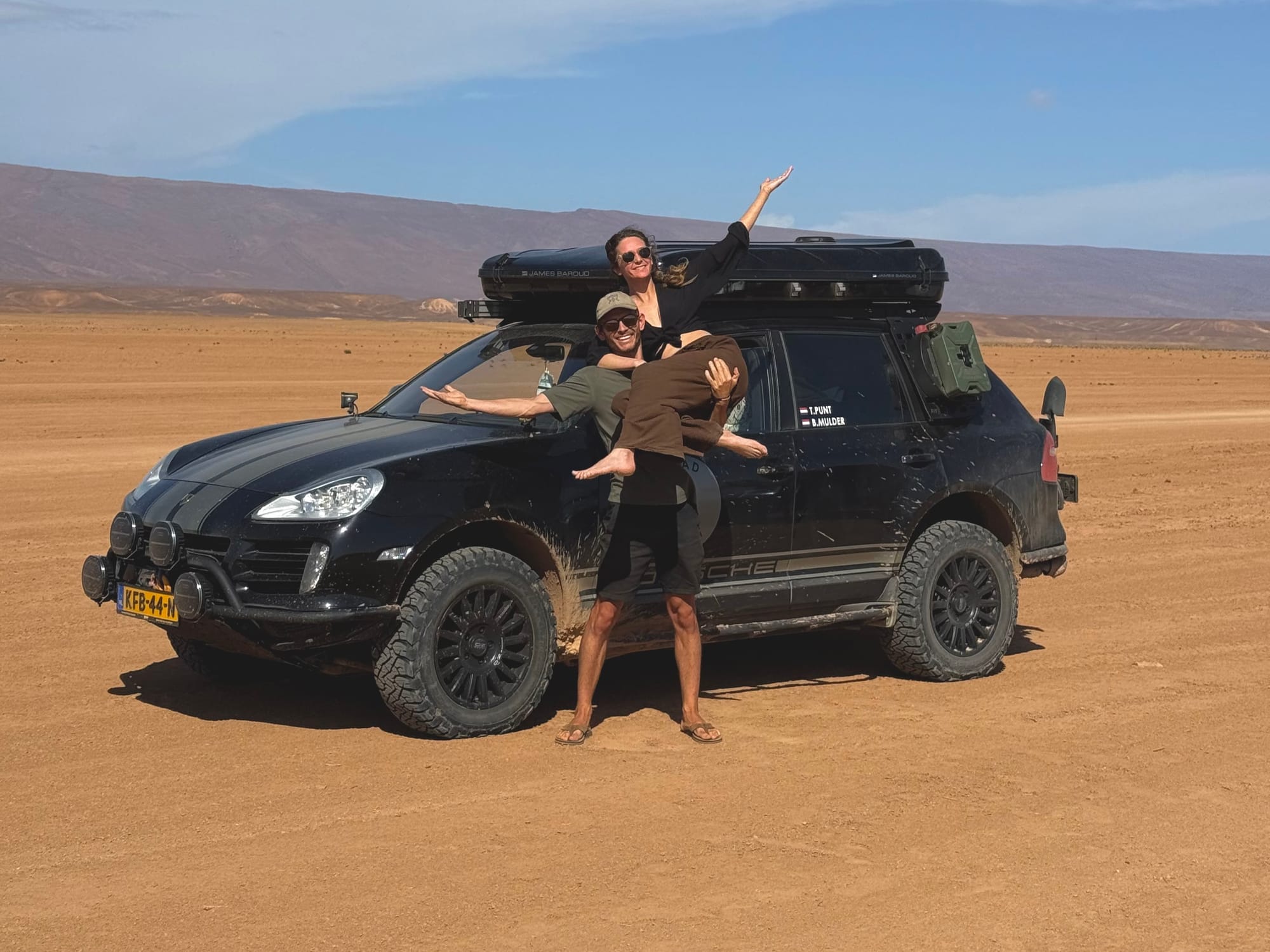
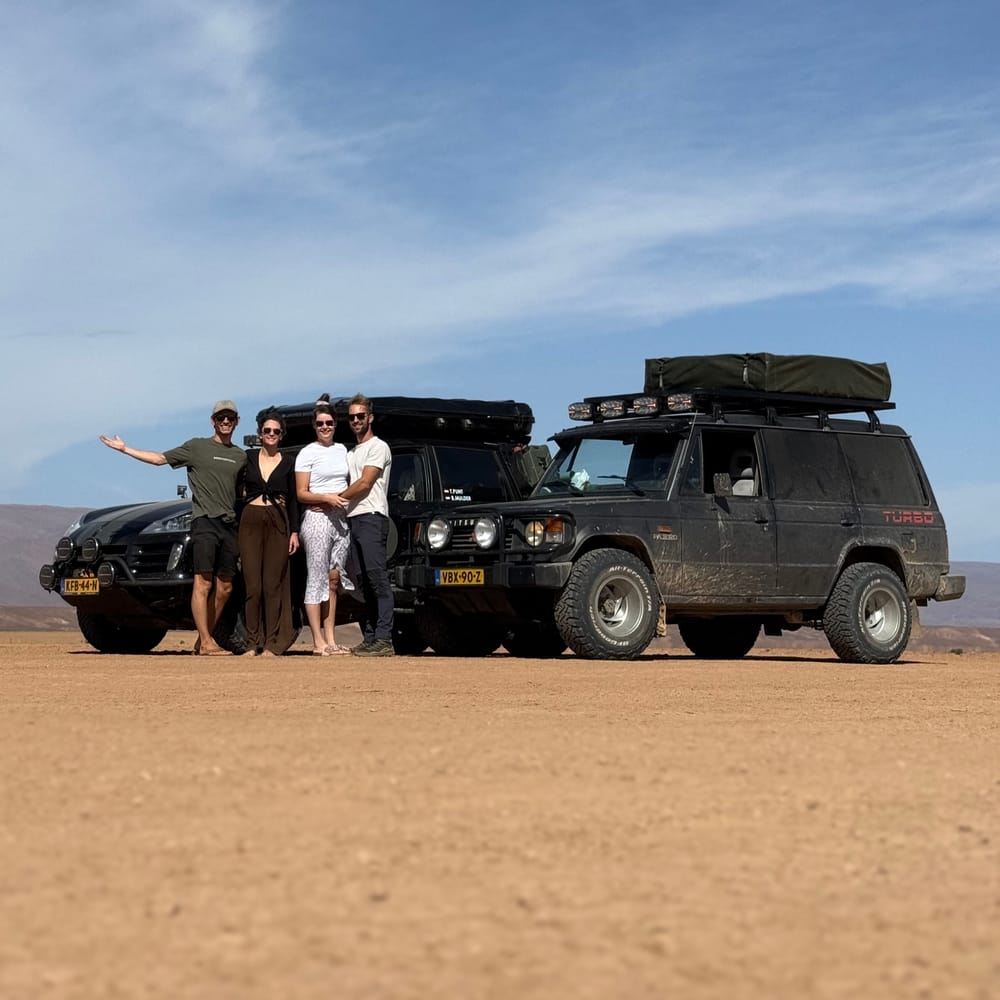
The track got off to a fun start straight away, with lovely soft sand. So traction control off and foot down. At least, those were the lessons I’d remembered from my off-road experience. And off it went. Like a dog wagging its tail in the sand, the Cayenne played with the deep ruts and dunes. Our buddies were driving a brilliant old Mitsubishi Pajero. A car you’d expect to do well in these conditions, but phew, were we impressed by the qualities of the Porsche.
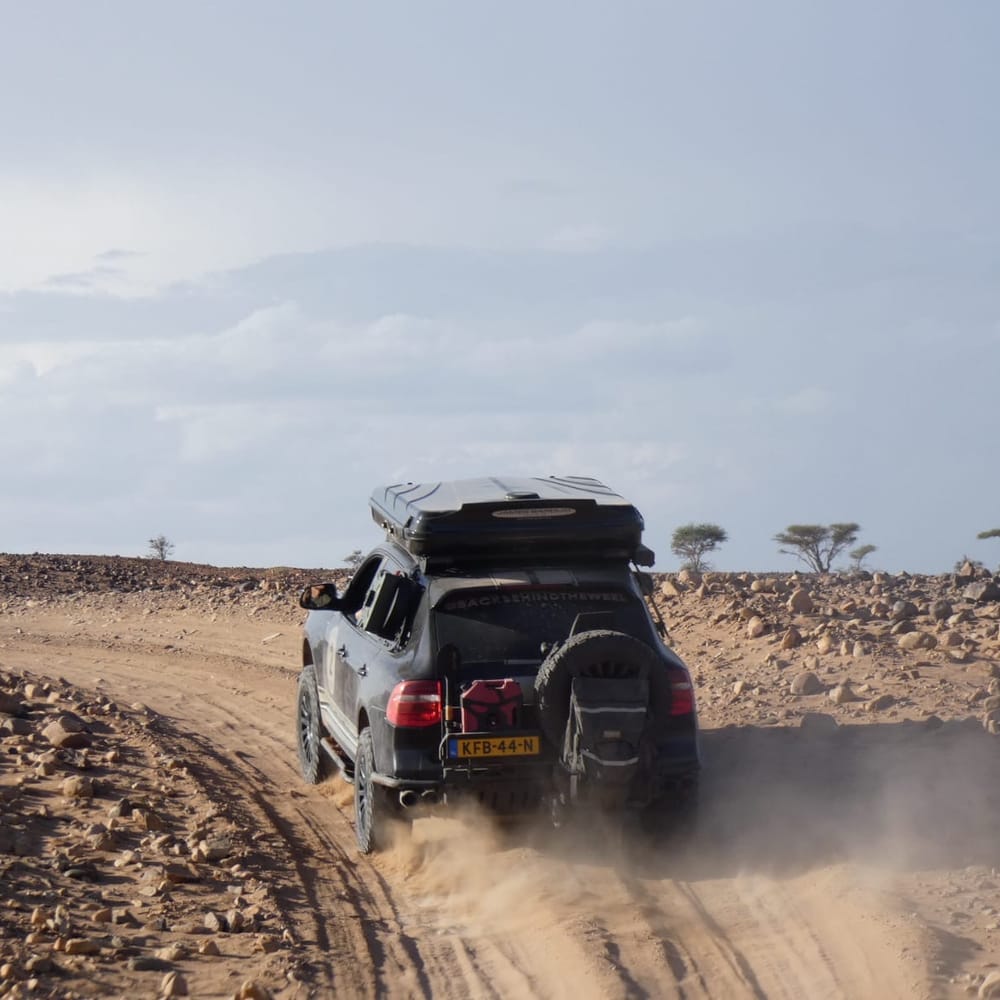
And so we drove on into the unknown. Even though thousands have driven this route before, it still feels as if you’re really pioneering. Nobody around you, zero signal and a landscape that changes every 15 kilometres. From sand dunes to palm tree oases to plains we thundered across at 100 kilometres an hour. All with a dust cloud behind us that had NASA double-checking its satellite images.
We were having fun. And even though we’re well aware that keeping the car in one piece matters most, we slowly gained more and more confidence in our machine. The off-road cars I’d driven before were capable, every single one of them, but on the road you wouldn’t want to go any faster than 100 in them. As far as we’re concerned, the Cayenne offers the best of both worlds. The confidence we’d built up by then meant we also started finding our own way off the visible route. Beautiful! We always kept the Pajero in sight, but it was fun to discover a few bits more on our own and then meet up again afterwards.
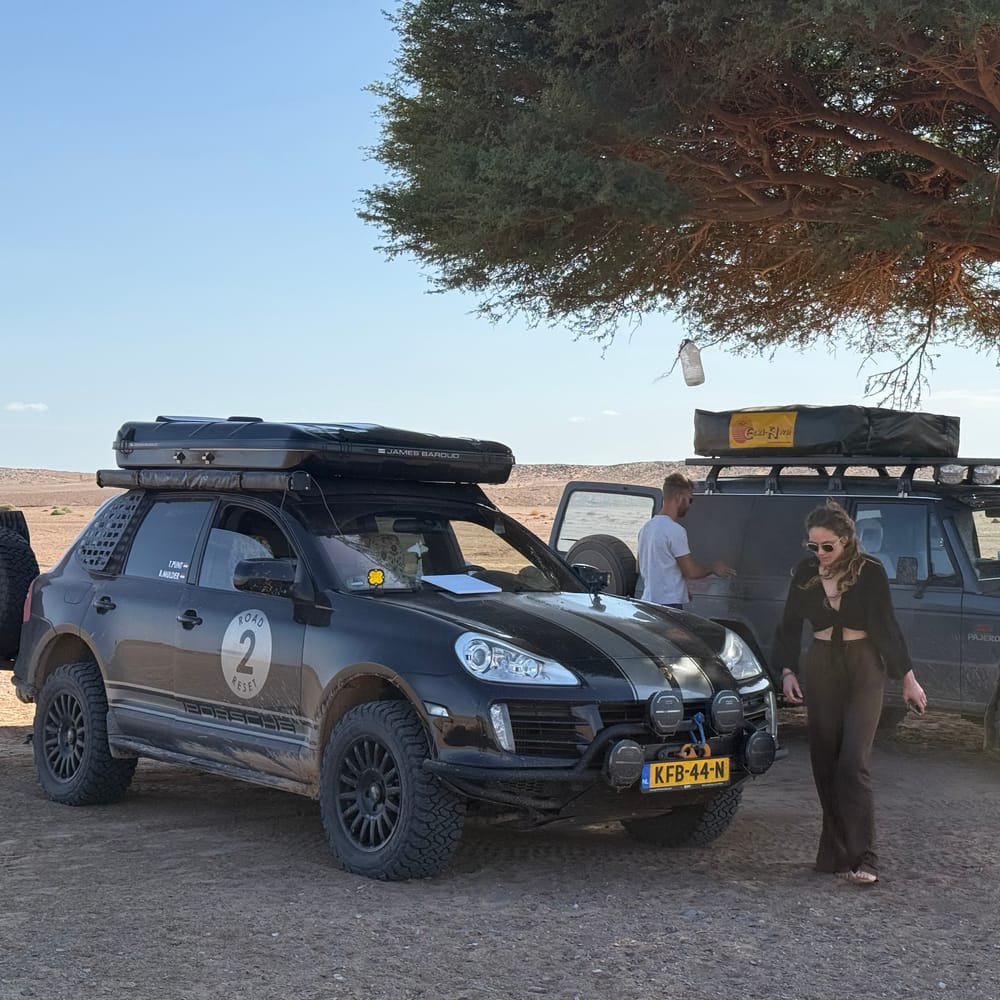
The day went by. Every now and then we took a break under a big tree, shared our coffee and got something to eat back from our travel companions. It was a lot of fun.
After a while we came across a small group of stranded French motorcyclists. One of them had gently gone down on a rocky dune. The bike wanted to start but cut out again straight away. Since the lads were anything but technical, and signal was nowhere to be found, they asked us whether we had any. Negative, but we do have a Starlink we could fire up. 2 minutes later the French were connected to our Wi-Fi and could track down the problem. It turned out to be a sensor that protects the engine after a fall. After a reset the engine started, after which a small merci was just about on offer. Remarkable people, the French.
We’d also had enough by then and set course further west. The last part of the route consisted mostly of rocks and washboard tracks. A kind of Belgian road surface on steroids. If you had fillings in your teeth, they’d definitely be lying in your lap after 20 kilometres on that track.
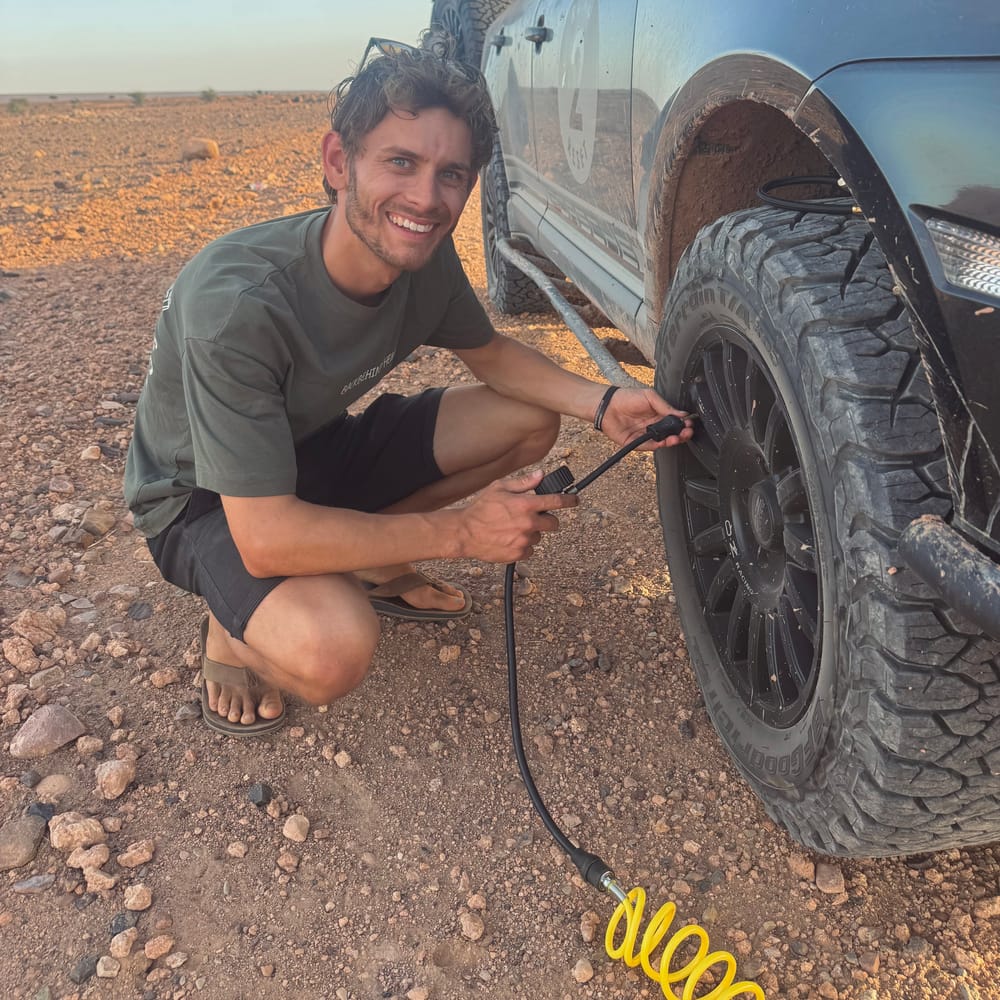
By then it was around 4 o’clock when we reached the end of this incredible route. What a drive, and what a car! Knackered from all the impressions, the heat and the shaking about, we pumped more air back into our tyres. We then waved the Dutch off and drove towards a campsite for a shower. Because that sand had got into places where the sun doesn’t shine.
Sinds lange tijd stond er vanmorgen een wekker. Want we hadden met onze Nederlandse vrienden afgesproken om 8 uur te gaan rijden. Om 07:45 ging dus het akelige geluid dat ik op zich niet gemist had. Ja ja, ik weet het, dit klinkt luxe en verwend. En dat is het misschien ook wel een beetje.
Nadat we de banden hadden afgelaten, gingen we dan. We hadden al wel wat paadjes met de Cayenne getrotseerd, maar deze 160 kilometer lange Dakar-route zonder asfalt zou ons dan eindelijk echt gaan vertellen uit welk hout hij gesneden was.
De piste begon gelijk leuk met lekker mul zand. Dus traction control uit en gas erop. Althans, dat waren de lessen die ik vanuit m’n offroadervaring onthouden had. En daar ging hij hoor. Als een kwispelende hond in het zand speelde de Cayenne met de diepe geulen en duinen. Onze buddy’s reden een geweldige ouwe Mitsubishi Pajero. Een auto waarvan je mag verwachten dat hij het goed doet in deze omstandigheden, maar poeh, wat waren wij onder de indruk van de kwaliteiten van de Porsche.
Zo reden we verder het onbekende in. Ondanks dat de rit al door duizenden gereden is, voelt het toch alsof je echt aan het pionieren bent. Niemand om je heen, nul bereik en een landschap dat om de 15 kilometer anders is. Van zandduinen naar palmboomoases tot aan vlaktes waar we met 100 kilometer per uur overheen denderden. Dit met een stofwolk achter ons aan waarvan NASA de satellietbeelden eens dubbel ging checken.
We hadden lol. Ook kregen we, ondanks dat we ons goed beseffen dat de auto heel houden het belangrijkste is, langzamerhand meer en meer vertrouwen in onze bolide. De offroadauto’s die ik voorheen bestuurd had, waren stuk voor stuk capabel, maar daar moest je op de weg niet harder dan 100 mee willen rijden. De Cayenne biedt wat ons betreft het beste van 2 werelden. Dat vertrouwen dat we ondertussen hadden, vertaalde zich erin dat we ook onze weg buiten de zichtbare route gingen zoeken. Prachtig! We hielden altijd de Pajero in het oog, maar het was leuk om ook stukjes meer zelf te ontdekken en elkaar daarna weer te treffen.
De dag verstreek. We hadden af en toe een pauze onder een grote boom, deelden onze koffie en kregen weer wat te eten van ons reisgezelschap ervoor terug. Het was erg gezellig!
Na een tijdje kwamen we een groepje gestrande Franse motorrijders tegen. Eentje was namelijk zachtjes op z’n plaat gegaan bij een rotsduin. De motor wilde starten, maar viel gelijk weer uit. Aangezien de gasten alles behalve technisch waren en het bereik ver te zoeken was, vroegen ze ons of wij bereik hadden. Negatief, maar we hebben wel een Starlink die we aan kunnen slingeren. 2 minuten later waren de Fransen verbonden met ons wifinetwerk en konden ze het probleem achterhalen. Bleek een sensor te zijn die na het omvallen de motor beveiligde. Na een reset startte de motor, waarna er net nog een kleine merci af kon. Blijft een bijzonder volk, die Fransen.
Wij vonden het ook wel weer mooi geweest en zetten verder koers richting het westen. Het laatste deel van de route bestond vooral uit rotsen en wasbordweggetjes. Een soort Belgisch wegdek op steroïden. Als je vullingen in je gebit zou hebben, lagen ze na 20 kilometer over dat pad zeker op je schoot.
Het was ondertussen rond een uur of 4 dat we aan het einde van deze geweldige route stonden. Wat een rit, en wat een auto! Bekaf van alle indrukken, de warmte en het geschud pompten we weer meer lucht in onze banden. We zwaaiden vervolgens de Nederlanders uit en reden richting een camping voor een douche. Want dat zand, dat zat op plekken waar de zon niet schijnt.
Por primera vez en mucho tiempo, esta mañana había un despertador puesto. Porque habíamos quedado con nuestros amigos holandeses en salir a las 8. Así que a las 07:45 sonó ese ruido horrible que, la verdad, no había echado de menos. Sí, sí, ya lo sé, esto suena a lujo y a niño mimado. Y puede que un poco sí lo sea.
Después de desinflar un poco las ruedas, nos pusimos en marcha. Ya habíamos plantado cara a unos cuantos caminos con el Cayenne, pero esta ruta del Dakar de 160 kilómetros sin nada de asfalto por fin nos iba a decir de qué pasta estaba hecho de verdad.
La pista empezó divertida desde el primer momento, con arena bien blanda. Así que control de tracción fuera y pisando a fondo. Al menos, esas eran las lecciones que recordaba de mi experiencia off-road. Y vaya si arrancó. Como un perro moviendo la cola en la arena, el Cayenne jugaba con los surcos profundos y las dunas. Nuestros compañeros de ruta llevaban un Mitsubishi Pajero viejo y estupendo. Un coche del que se espera que vaya bien en estas condiciones, pero madre mía, qué impresionados nos dejaron las cualidades del Porsche.
Y así seguimos adentrándonos en lo desconocido. Aunque miles de personas ya han hecho esta ruta, sigue dando la sensación de que eres un auténtico pionero. Nadie a tu alrededor, cero cobertura y un paisaje que cambia cada 15 kilómetros. De dunas de arena a oasis de palmeras, hasta llanuras que cruzábamos a toda pastilla a 100 kilómetros por hora. Todo con una nube de polvo detrás de nosotros que hizo que la NASA revisara dos veces sus imágenes de satélite.
Nos lo estábamos pasando en grande. Y aunque tenemos muy claro que lo más importante es que el coche siga entero, poco a poco fuimos cogiendo cada vez más confianza en nuestro bólido. Los coches off-road que había conducido antes eran capaces, todos y cada uno, pero en carretera no querías ir a más de 100 con ellos. Para nosotros, el Cayenne ofrece lo mejor de los 2 mundos. Esa confianza que habíamos ido ganando hizo que también empezáramos a buscar nuestro propio camino fuera de la ruta visible. ¡Precioso! Siempre teníamos el Pajero a la vista, pero era divertido descubrir algunos tramos por nuestra cuenta y luego volver a encontrarnos.
El día fue pasando. De vez en cuando hacíamos una pausa bajo un árbol grande, compartíamos nuestro café y a cambio nuestros compañeros de viaje nos daban algo de comer. ¡Nos lo pasamos genial!
Al cabo de un rato nos encontramos con un grupito de motoristas franceses tirados. Uno de ellos se había ido al suelo, suavecito, en una duna de rocas. La moto quería arrancar, pero se calaba enseguida. Como los chicos eran de todo menos mañosos y la cobertura brillaba por su ausencia, nos preguntaron si nosotros teníamos. Negativo, pero sí tenemos un Starlink que podíamos encender. 2 minutos después los franceses estaban conectados a nuestro wifi y pudieron dar con el problema. Resultó ser un sensor que protegía el motor después de la caída. Tras un reset, la moto arrancó, y hasta les dio para un pequeño merci. Qué gente tan peculiar, los franceses.
Nosotros también dimos el día por bueno y pusimos rumbo al oeste. La última parte de la ruta era sobre todo rocas y pistas de chapa ondulada. Una especie de carretera belga con esteroides. Si tuvieras empastes, después de 20 kilómetros por ese camino seguro que los tendrías en el regazo.
Ya eran más o menos las 4 cuando llegamos al final de esta ruta increíble. ¡Qué ruta, y qué coche! Hechos polvo por todas las impresiones, el calor y el traqueteo, volvimos a meter aire en las ruedas. Luego despedimos a los holandeses y pusimos rumbo a un camping para darnos una ducha. Porque esa arena se había metido en sitios donde la espalda pierde su nombre.